How to Integrate AI Into Your MVP Without Overengineering It
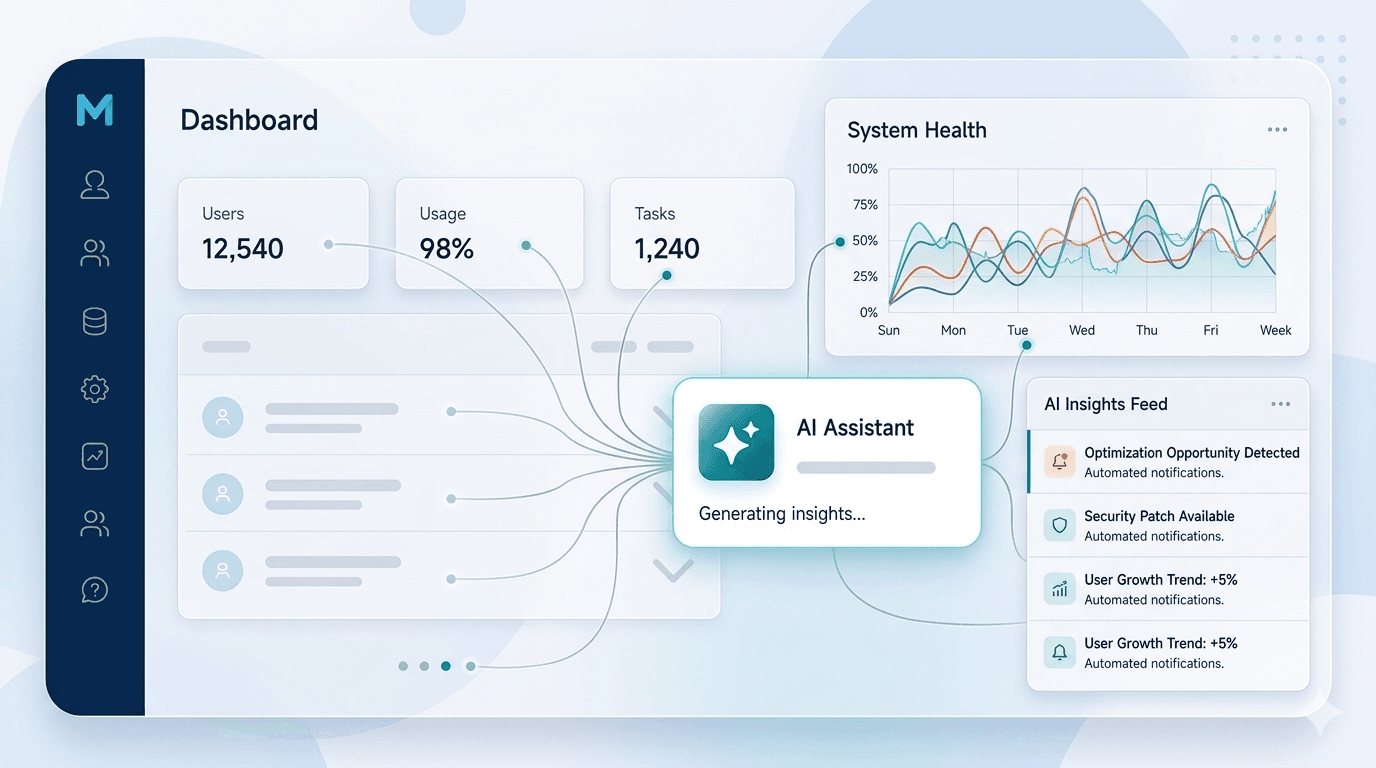
AI is not a feature. It's an answer to a specific user problem. Most founders add AI because it sounds good on a pitch deck — here's how to do it right.
Every founder I talk to wants AI in their product. That's fine. The problem is most of them want AI as a differentiator rather than as a solution to a real user problem.
Start with the problem, not the technology
Before adding any AI capability, answer this: what task is currently slow, tedious, or error-prone for your user? If the answer is clear, AI is probably the right tool. If the answer is 'it makes us sound innovative', skip it.
The best AI integrations I've built were invisible — users just noticed the product was smarter and faster.
The practical integration stack
For most startups, OpenAI's API (GPT-4o or similar) handles 90% of use cases: summarisation, classification, generation, extraction. You don't need to train your own model. You need a well-designed prompt, a reliable API integration, and smart caching to keep costs manageable.
What this means for founders
Don't let AI scope creep kill your launch timeline. Pick one workflow where AI adds clear, measurable value to the user. Build that, ship it, measure it. Then expand. We've built AI features into MVPs in 48 hours — the technology isn't the hard part. The hard part is knowing what to automate.
Every insight on this page comes from building real products with real founders. If something here resonates with a challenge you're facing, it's probably worth a 30-minute conversation.
Ready to build?
Launch your AI product in 30 days.
Turn this insight into action. Book a free 30-minute strategy call and leave with a clear scope, architecture plan, and timeline.